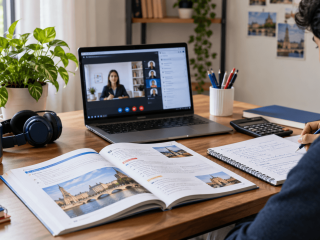
French A1 Online Classes: A Complete Beginner's Guide
French A1 Online Classes: A Complete Beginner's Guide
Starting French at A1 can feel surprisingly challenging. You are learning unfamiliar sounds, new vocabulary, grammatical patterns and a different way of constructing sentences at the same time. For many beginners, French online classes provide a structured way to bring all these elements together while learning from home.
The A1 level is the starting point of the French language journey. Students taking French online classes at this level usually begin with greetings, introductions, numbers and simple everyday conversations before gradually moving into grammar, listening, reading and writing.
This guide explains what French A1 involves, why beginners sometimes struggle, how to practise effectively and what you can realistically expect from your first level of French.
Beginners who prefer learning from home can explore French online classes to understand how French is taught across different proficiency levels. Online learning can provide a structured way to develop speaking, listening, reading and writing skills while maintaining a flexible learning routine.

What Is French A1 Level?
A1 is the beginner level defined by the Common European Framework of Reference for Languages (CEFR).
Someone completing A1 should gradually become capable of understanding and using simple expressions related to familiar everyday situations.
Students attending French online classes at A1 commonly learn how to:
- introduce themselves;
- ask and answer basic personal questions;
- talk about family and occupations;
- understand numbers, dates and time;
- order simple food and drinks;
- ask basic travel questions;
- describe daily routines;
- understand short messages; and
- participate in simple conversations.
A1 does not mean fluency. It means you have developed the foundation needed to communicate in predictable situations and continue towards A2.
What Do You Learn in French A1 Online Classes?
A good A1 course should not consist only of grammar lessons.
The purpose of French online classes should be to develop vocabulary, grammar, pronunciation, listening, speaking, reading and writing together.
Typical A1 topics include:
- greetings and introductions;
- numbers and dates;
- countries and nationalities;
- family;
- professions;
- food and drinks;
- shopping;
- transportation;
- places around town;
- hobbies;
- daily routines;
- weather;
- basic travel situations; and
- descriptions of people and objects.
Learning these topics within everyday situations makes it easier to understand why particular vocabulary and grammar structures are being used.
If you are starting from the basics, there are several ways to learn French online through structured lessons and regular independent practice. Combining classes with vocabulary revision, listening exercises and speaking practice can help beginners gradually become comfortable using French.
French A1 Vocabulary Lists for Beginners
Vocabulary provides the building blocks for communication.
However, beginners don't need to memorise enormous lists of unrelated French words.
Students following French online classes can make vocabulary easier to remember by grouping words according to everyday themes.
Greetings
Bonjour – Hello / Good morning
Bonsoir – Good evening
Salut – Hi
Au revoir – Goodbye
À bientôt – See you soon
Merci – Thank you
S'il vous plaît – Please
Personal Information
A1 learners usually learn vocabulary related to:
- names;
- age;
- nationality;
- professions;
- family;
- addresses;
- hobbies; and
- daily routines.
Numbers, Dates and Time
Numbers are particularly important because they appear constantly in everyday communication.
Students need them for phone numbers, addresses, prices, dates, appointments and telling the time.
Everyday Vocabulary
Organise vocabulary around themes such as food, family, transportation, clothing, work, home and hobbies.
Learning words within sentences is often more effective than memorising isolated translations.
For example, rather than learning only:
manger – to eat
learn:
Je mange une pomme. – I am eating an apple.
French Greeting Phrases for A1 Learners
Greetings are among the first expressions introduced in French online classes because they allow beginners to start communicating almost immediately.
Useful expressions include:
Bonjour, comment allez-vous ?
Hello, how are you?
Je m'appelle Rahul.
My name is Rahul.
Enchanté(e).
Nice to meet you.
Comment vous appelez-vous ?
What is your name?
Je vais bien, merci.
I'm fine, thank you.
À demain !
See you tomorrow!
A1 students also begin understanding the distinction between tu and vous.
Generally, tu is informal, while vous is used in formal situations, with people you don't know well, or when addressing more than one person.
Common French A1 Pronunciation Mistakes
Pronunciation is one of the reasons beginners sometimes find French more difficult than expected.
Unlike some languages, French words are not always pronounced exactly as an English-speaking learner might expect from their spelling.
Pronunciation practice should therefore form a regular part of French online classes, particularly during A1.
Pronouncing Every Written Letter
A common beginner mistake is trying to pronounce every letter.
Many final consonants in French words are silent.
Listening carefully to native or proficient speakers helps learners recognise these patterns.
Struggling With the French R
The French r is different from the English r.
It can take considerable practice before the sound feels natural. Beginners shouldn't allow difficulty with one sound to prevent them from speaking.
Nasal Sounds
Sounds involving combinations such as an, en, on and in can initially be difficult.
Listening and repeating words and short phrases regularly can gradually make these sounds more familiar.
Ignoring Liaison
French pronunciation sometimes connects a normally silent consonant with the vowel at the beginning of the following word.
A1 students don't need to master every liaison rule immediately, but they should gradually become aware of how connected French speech sounds.
Why French Learners Struggle at A1 Level
A1 is called the beginner level, but that doesn't necessarily mean it feels easy.
Everything is new.
A student may simultaneously be trying to understand vocabulary, gender, verb conjugation, pronunciation and sentence structure.
People taking French online classes sometimes expect themselves to speak comfortably after only a few weeks. When they cannot, they assume they are progressing too slowly.
In reality, understanding a sentence and producing that sentence spontaneously during conversation are different skills.
Language development requires repetition.
Making mistakes during A1 is therefore a normal part of learning rather than evidence that you are bad at languages.
A French A1 level course introduces beginners to essential vocabulary, grammar, pronunciation and everyday communication. A1 provides the foundation for understanding simple French and prepares learners to progress towards A2 and higher levels.
Why French A1 Can Seem Harder Than Expected
One reason French A1 feels difficult is the difference between recognition and production.
You might immediately understand:
Comment allez-vous ?
But when someone asks you the question unexpectedly, you may need several seconds to formulate an answer.
That gap is normal.
Regular speaking activities during French online classes can help reduce the delay between understanding French and responding in French.
The objective isn't to eliminate mistakes immediately. It is to become increasingly comfortable using what you already know.
Speaking Confidence vs Actual French Level
Language level and speaking confidence are not the same thing.
A learner with limited vocabulary may communicate confidently because they are willing to make mistakes. Another student may understand considerably more French but hesitate whenever they need to speak.
Interactive French online classes can be particularly useful when learners have regular opportunities to answer questions, construct sentences and participate in short conversations.
Don't wait until B1 or B2 before speaking.
At A1, even sentences such as these are useful:
Je suis étudiant.
I am a student.
J'habite à Bangalore.
I live in Bangalore.
J'aime la musique.
I like music.
Simple French is still real communication.
How to Prepare for Your First Online French Class
You don't need previous French knowledge before beginning an A1 course.
However, preparing your learning environment can make your French online classes more comfortable.
Use headphones whenever possible so you can hear pronunciation clearly.
Check your internet connection and microphone before the lesson. If classes include speaking activities, good audio becomes particularly important.
Keep a notebook or digital document specifically for French and organise it into areas such as:
- vocabulary;
- grammar;
- useful expressions;
- pronunciation;
- mistakes; and
- questions.
You can also learn a few expressions such as bonjour, merci, oui, non and au revoir before your first lesson.
What Is the Best Time of Day to Study French Online?
There is no universal best time.
Some people concentrate better in the morning, while working professionals may find evenings more convenient.
When choosing French online classes, consider whether the class schedule fits naturally into your routine.
Consistency matters more than selecting a supposedly perfect learning hour.
Studying for 20–30 focused minutes on most days can often be more productive than studying for several hours once a week and then forgetting about French.
Try dividing your independent study between vocabulary, listening, pronunciation, speaking and revision.
French Learning Apps vs Structured Courses
Language-learning apps can be useful for beginners.
They can provide:
- vocabulary exercises;
- flashcards;
- short listening activities;
- basic grammar practice;
- pronunciation exercises; and
- daily revision.
However, an app and structured French online classes serve somewhat different purposes.
Apps usually follow predetermined activities. A teacher can explain why a learner is repeatedly making a particular grammatical or pronunciation mistake.
A structured course also provides progression from one topic to another.
There is no need to choose one exclusively.
A practical approach is to use French online classes as the main learning structure and apps as supplementary tools for revision and additional exposure.
Cultural Tips for French A1 Learners
Language and culture are closely connected.
Even at A1, learning a few cultural conventions can make your French sound more natural.
For example, greetings are important in many everyday interactions.
Saying Bonjour before asking someone a question is a useful habit.
Students in French online classes should also learn when tu and vous are appropriate.
These differences may appear small, but they influence how communication is perceived.
Culture doesn't need to be studied separately from the language. It can be introduced naturally through dialogues, examples and everyday situations.
French A1 Resources in Different Languages
Beginners sometimes find it easier to understand difficult concepts when explanations are available in a language they already know well.
For Indian learners, this might mean learning through English, Hindi, Kannada, Tamil or another familiar language.
This can be useful initially.
However, students attending French online classes should gradually increase the amount of French they hear and read.
For example, initially you might learn:
pomme → apple
Eventually, you want your brain to associate pomme directly with the object rather than translating it into English first.
Reducing dependence on translation becomes increasingly useful as you progress.
Budget-Friendly Ways to Learn French
Learning French doesn't require paying for many different resources simultaneously.
A learner can combine French online classes with free or inexpensive learning activities.
Try listening to beginner podcasts, watching simple French videos, creating flashcards and reading short French texts.
You can also practise with classmates.
Another simple technique is keeping a small French diary.
At A1, entries don't have to be complicated:
Aujourd'hui, je travaille.
Today, I work.
Il fait chaud.
It is hot.
J'aime le café.
I like coffee.
Three simple sentences written every day can become valuable practice over several months.
Language-Learning Myths That Stop People From Trying
Several myths discourage beginners unnecessarily.
"I'm Too Old to Learn French"
Adults can learn languages successfully.
Adults may actually have advantages when understanding grammar, identifying patterns and organising their learning.
"You Need Natural Language Talent"
Regular practice is usually more important than believing you have a special talent for languages.
"I Shouldn't Speak Until My Grammar Is Good"
Speaking is one of the ways grammar becomes usable.
Students taking French online classes should therefore try to speak from the beginning rather than waiting until their French becomes perfect.
"Online Learning Doesn't Work"
Online learning is not automatically effective or ineffective.
What matters is the quality of instruction, interaction, practice, feedback and the learner's consistency.
The Gap Between A1 and A2 French
A1 establishes the foundation, while A2 expands your ability to communicate independently in familiar situations.
At A1, you might say:
J'aime voyager.
At A2, you may begin describing where you travelled, who you travelled with and what you did there.
Students completing A1 French online classes should therefore not expect A2 simply to mean memorising another vocabulary list.
The progression involves learning how to connect ideas and communicate with greater independence.
A strong A1 foundation makes that transition easier.
Can Learning French Help Your Career?
Career opportunities are one reason some people begin learning French.
French can complement professional skills in industries such as:
- international business;
- technology;
- hospitality;
- tourism;
- education;
- customer service;
- international sales; and
- multinational organisations.
However, completing beginner French online classes should not be confused with reaching professional fluency.
A1 is a foundation.
For many jobs requiring regular French communication, employers may expect a considerably higher level.
How Much French Is Enough to Start Job Hunting?
There isn't a single French level required for every job.
Some technology companies and international organisations may have positions where English is the primary working language. Other employers may expect employees to communicate with colleagues or customers in French throughout the day.
The progression can roughly be understood as:
A1 → foundation
A2 → basic everyday communication
B1 → increasing independence
B2 → significantly greater ability to communicate in professional and social situations
These are broad descriptions rather than employment guarantees.
If employment is your long-term objective, French online classes at A1 can be your starting point, but continuing beyond the beginner level will usually make French substantially more useful professionally.
Tech Jobs in France That Don't Require Fluent French
Some international companies in France use English extensively, particularly in technology and globally distributed teams.
Software development, engineering, data, research and certain startup positions may sometimes advertise roles where French isn't mandatory.
However, this varies by employer and position.
Even when French isn't required for the job itself, learning it can make everyday life and workplace integration easier.
For someone beginning French online classes, employment in France can therefore be viewed as a long-term motivation rather than something A1 alone guarantees.
Living in France as an English Speaker
It is possible to manage some situations using English, particularly in international environments and larger cities.
However, life extends beyond the workplace.
Shopping, renting accommodation, speaking with neighbours, using local services and handling everyday administrative situations can become easier with French.
Even beginner French online classes can help learners become comfortable with basic interactions they may encounter while travelling or living in a French-speaking environment.
Making Friends in France While Learning French
You don't need to wait until you are fluent before interacting with French speakers.
At A1, conversations will naturally be short.
That is fine.
Language exchanges, hobby groups, classmates and international communities can provide opportunities to use simple French.
The objective shouldn't be to transform every conversation into a language lesson. Use whatever French you know naturally and allow your communication skills to develop over time.
French Workplace Culture and Language Expectations
Language expectations can vary significantly between workplaces.
An international company might conduct much of its work in English, while another organisation may use French for meetings, emails and informal conversations.
Learners beginning French online classes for professional reasons should therefore research the language expectations of their particular industry rather than assuming that one French level applies to every career.
French ability is only one factor. Professional qualifications, experience and technical skills remain important.
How French Fluency Can Open New Career Paths
Higher French proficiency may expand the range of professional environments in which you can operate comfortably.
Depending on your qualifications, French can complement careers involving international companies, education, tourism, customer relations, technology, global mobility and international business.
This doesn't mean French automatically produces job opportunities.
Think of language as an additional professional capability.
The journey may begin with A1 French online classes, but the real professional advantage becomes stronger as learners develop greater independence in speaking, listening, reading and writing.
How to Get Better Results From French Online Classes
Simply attending lessons is not enough.
What you do between classes matters.
After every lesson, review the main vocabulary and grammar you studied.
Speak example sentences aloud.
Listen to short pieces of French regularly.
Instead of memorising hundreds of words, learn smaller groups and actually use them.
Most importantly, participate during your French online classes.
Answer questions even when you're unsure.
Try constructing your own sentences.
Ask when you don't understand something.
Language learning requires active participation.
How Long Does It Take to Complete French A1?
There isn't one fixed amount of time because learning speed depends on course intensity, previous language-learning experience, attendance and independent practice.
Two students attending the same French online classes may progress differently if one regularly practises outside class while the other studies only during lessons.
Rather than focusing exclusively on finishing A1 quickly, concentrate on whether you can actually use what you have learned.
A strong foundation is more valuable than rushing to the next level.
What Should You Be Able to Do After French A1?
By the end of A1, you should not expect to speak fluent French.
You should instead notice that situations that initially seemed completely unfamiliar have become manageable.
You may be able to introduce yourself, discuss basic personal information, understand familiar questions, read short messages and participate in simple everyday exchanges.
Completing French online classes at A1 should also give you the foundation required to begin A2 without having to relearn basic concepts.
Learners preparing to demonstrate their beginner-level proficiency can learn more about the French A1 exam and the language skills expected at this stage. Understanding the reading, writing, listening and speaking components can make exam preparation more systematic.
Before beginning the level, reviewing the French A1 syllabus can give learners a clearer understanding of the vocabulary, grammar and communication skills covered at A1. It can also help students track their progress as they move through the course.
Learners interested in studying remotely can also explore online French classes to understand how structured lessons, teacher interaction and regular practice can support French language development from home.
French Online Classes for Complete Beginners
French online classes provide complete beginners with a structured way to start learning pronunciation, vocabulary, grammar, speaking, listening, reading and writing. Students who want to learn French online can begin at A1 without previous knowledge of the language. Well-designed online French classes for beginners introduce concepts gradually and give students opportunities to use new vocabulary in practical situations. Instead of studying disconnected topics, a structured online French language course creates a clear pathway from basic introductions and everyday expressions toward more confident communication.
What Should a French A1 Online Course Include?
A comprehensive French A1 online course should cover much more than vocabulary lists and grammar exercises. Beginners need pronunciation training, basic sentence construction, common verbs, everyday vocabulary, listening exercises and regular speaking opportunities. Good French courses online should also include assignments, revision activities and teacher feedback so that students can identify mistakes early. When comparing different French online classes, look for a balanced curriculum that develops speaking, listening, reading and writing together.
Learning French Online with Live Teachers
Students who want to learn French online often benefit from interaction with a real teacher, particularly during the beginner stage. Live French lessons online allow learners to ask questions immediately, practise pronunciation and participate in conversations rather than simply watching recorded lessons. A qualified French tutor online can also identify individual difficulties with grammar, pronunciation or speaking. Teacher interaction is especially useful at A1 because correcting basic mistakes early can provide a stronger foundation for higher French levels.
French Speaking and Conversation Practice at A1
Speaking should begin from the first stages of a French learning course rather than being postponed until students know more grammar. A1 learners can practise introducing themselves, discussing their family, ordering food, asking simple questions, giving directions and talking about everyday routines. Interactive French online classes and French lessons online can provide regular opportunities to practise these situations. Even short conversations help students convert vocabulary and grammar knowledge into practical communication skills.
Free French Lessons Online as Additional Practice
Students can find many free French lessons online covering beginner vocabulary, pronunciation, listening and grammar. Learners searching for learn French online free, French classes online free, free French classes or a French course online free can use these resources to supplement their regular studies. However, free resources often come from different sources and may not follow a consistent A1 curriculum. Combining free practice materials with structured French A1 online classes can provide both flexibility and an organised learning pathway.
How to Choose the Best Online French Classes
The best online French classes should be evaluated on teaching quality rather than price alone. Before selecting a French course online, check the teacher's experience, course syllabus, class size, speaking opportunities, lesson duration, learning materials and availability of feedback. Students should also determine whether lessons are live, recorded or a combination of both. The best French online course for a particular learner is one that matches their schedule, budget, learning style and long-term language goals.
French A1 Online Classes for Adults and Working Professionals
Online French classes for adults can be particularly convenient for professionals who cannot attend a physical institute regularly. Flexible French lessons online for adults eliminate commuting and allow learners to study from home or work. A regular-paced online French language course can be easier to manage alongside professional responsibilities than an intensive schedule. Working learners should choose a timetable they can maintain consistently and reserve additional time each week for revision, listening and speaking practice.
Group French Classes or an Online French Tutor?
Students can choose between group French online classes and individual sessions with a French tutor online. Group classes provide interaction with classmates, opportunities for role-play and exposure to questions from other learners. Private French lessons online offer greater individual attention and can focus specifically on pronunciation, grammar or speaking difficulties. Some learners combine a group French learning course with occasional private tutoring when they need additional support.
Learn French Online with a Certificate
Students searching for learn French online with certificate programmes should understand the difference between a course-completion certificate and an official French proficiency qualification. Many French courses online with certificate provide evidence that a student has completed a particular programme, while recognised examinations may separately assess actual language proficiency. Before enrolling in an online French language course, check what certificate is provided and whether it meets your academic, professional or personal objective.
Building a Learning Path from French A1 to Higher Levels
A1 should be viewed as the beginning of a longer French learning course, not the final destination. After developing a solid A1 foundation, learners can progress through A2 and eventually B1, B2 and higher proficiency levels. Continuing with structured French courses online allows vocabulary, grammar and communication skills to develop progressively. Students who learn French online consistently should also increase their exposure to authentic French through listening, reading and conversation as their ability improves. A strong A1 foundation makes progression to higher French levels considerably easier.
Frequently Asked Questions About French A1 Online Classes
1. What does French A1 level actually mean?
French A1 is the beginner stage of learning French. At this level, you start understanding and using basic everyday expressions. You should gradually become comfortable introducing yourself, asking simple questions, talking about familiar subjects and understanding short, clear conversations. French A1 online classes are designed to build these fundamental skills before you progress to A2.
For students who want to learn French online, A1 provides the foundation for future language development. A structured online French language course at A1 normally introduces pronunciation, essential vocabulary, basic grammar and simple communication before moving toward more complex French.
2. Can I join French A1 online classes if I know absolutely no French?
Yes. You can start French A1 online classes without any previous knowledge of French. A beginner course normally starts with pronunciation, greetings, numbers, introductions and simple vocabulary before moving into basic grammar and conversations. You don't need to study French beforehand.
In fact, online French classes for beginners are specifically designed for learners starting from zero. Good French courses online introduce the language gradually, allowing complete beginners to develop confidence without assuming previous knowledge.
3. Is French A1 hard to learn?
French A1 is manageable for beginners, although the first few weeks can feel challenging. Pronunciation, masculine and feminine nouns and verb conjugations may be unfamiliar. Regular French A1 online classes and short periods of practice between lessons usually make these concepts easier as you become familiar with the language.
Students taking French lessons online should expect some initial difficulty because they are learning a new pronunciation system, vocabulary and grammar simultaneously. A structured French learning course makes the process easier by introducing these concepts progressively.
4. What can I actually do with A1-level French?
At A1, you can communicate in simple and predictable situations. You may be able to introduce yourself, give basic personal information, talk about your family, order food, ask for directions, understand prices and times, and ask and answer straightforward questions. You shouldn't expect fluency after completing French A1 online classes; A1 is your foundation.
Students who learn French online at A1 should focus on becoming comfortable with simple everyday communication. A good French course online helps transform beginner vocabulary and grammar into practical expressions that can be used in real situations.
5. Can I learn French A1 completely online?
Yes. A1 can be learned entirely online when the program includes speaking, listening, reading, writing and teacher interaction. French A1 online classes can be particularly convenient for learners who cannot regularly travel to a physical language school.
Many students now choose to learn French online because live classes can provide much of the same teacher interaction available in a physical classroom. A structured online French language course can include live instruction, digital learning materials, assignments, conversation practice and teacher feedback.
6. Can I realistically learn French A1 in three months?
For some learners, three months can be enough to make substantial progress through A1, particularly with regular lessons and independent practice. However, simply completing three months of French A1 online classes doesn't automatically mean you have mastered A1. Your ability to understand and use French is a better measure than time alone.
Students following intensive French courses online may progress faster if they study consistently outside class. When you learn French online, the combination of live lessons, revision, vocabulary practice and listening exposure influences progress more than the number of calendar months alone.
7. How much time should I spend studying French every day?
Beginners don't necessarily need to study for several hours every day. Around 20–30 minutes of focused daily practice can be valuable alongside French A1 online classes. Use that time for vocabulary, listening, pronunciation, reading or reviewing material from your most recent lesson.
Students attending regular French lessons online can use short daily sessions to reinforce what they learn in class. A consistent routine alongside an online French language course is generally more sustainable than studying intensively only once or twice per week.
8. Can I learn French if I only have 15 minutes a day?
Yes, although progress will naturally be slower than with more intensive study. Fifteen focused minutes can still be useful when used consistently. For example, revise vocabulary one day and practise listening the next. Combining these short sessions with regular French A1 online classes can create a sustainable routine.
Students who want to learn French online with limited time can divide their learning into short activities. Vocabulary apps, short listening exercises and pronunciation practice can complement scheduled French lessons online and help maintain daily exposure to the language.
9. Are French A1 online classes suitable for working professionals?
Yes. Online learning can work particularly well for professionals because it removes commuting time and allows them to fit language learning around work. If you are working full-time, choose French A1 online classes with a schedule you can realistically maintain for several months.
Many online French classes for adults are designed around the schedules of professionals and university students. Flexible French courses online can make language learning more practical for people who cannot regularly attend classroom-based courses.
10. What should I learn first when starting French?
Start with pronunciation, greetings, introductions, numbers and frequently used everyday expressions. You can then gradually add vocabulary and essential grammar. Good French A1 online classes should introduce topics in a logical order instead of asking beginners to memorise large amounts of vocabulary at once.
A well-designed French learning course usually progresses from simple communication toward increasingly structured sentences. If you are starting to learn French online, building correct pronunciation and frequently used vocabulary early can make later speaking and listening easier.
11. What should I know before taking my first French A1 online class?
You don't need to prepare academically for a beginner course. Check your internet connection, microphone and headphones, and keep a notebook ready. During your first French A1 online class, concentrate on listening carefully and participating rather than worrying about making mistakes.
If you are taking French lessons online for the first time, make sure you can comfortably use the learning platform before class begins. A good online French language course should explain the learning process, materials and expectations at the beginning.
12. Why does French A1 sometimes feel harder than expected?
At A1, almost everything is new at once: pronunciation, vocabulary, sentence structure, noun gender and verb conjugation. This can create the impression that you aren't progressing. After several weeks of French A1 online classes, familiar words and sentence patterns usually start becoming easier to recognise.
Students following online French classes for beginners should not expect every concept to become automatic immediately. Regular exposure through a structured French course online helps unfamiliar language patterns gradually become more recognisable.
13. Why do I understand French but freeze when I have to speak?
Understanding a sentence is easier than producing one spontaneously. Your brain may recognise French vocabulary before it can retrieve those words quickly enough for conversation. Speaking regularly during French A1 online classes helps reduce this gap. Don't wait until your grammar is perfect before speaking.
Interactive French lessons online should provide opportunities to answer questions, role-play situations and participate in short conversations. Students can also practise with a French tutor online if they need additional individual speaking support.
14. Can I really learn conversational French at A1 entirely online?
You can learn basic conversational French online, provided your course includes real speaking practice. At A1, conversation means simple exchanges rather than long discussions. Interactive French A1 online classes can help you practise introductions, questions, everyday situations and short dialogues.
Students who learn French online should look for live interaction rather than relying entirely on recorded lessons. A well-designed online French language course can provide conversation practice with teachers and classmates from the beginner stage.
15. What are the most common mistakes French A1 learners make?
Common mistakes include pronouncing every written letter, translating directly from English, confusing masculine and feminine nouns, using incorrect articles and conjugating verbs incorrectly. Another major mistake is avoiding speaking because of fear of errors. French A1 online classes should give students opportunities to make and correct these mistakes.
Beginners taking French courses online should treat mistakes as part of the learning process. Regular corrections from a teacher or French tutor online can prevent frequently repeated errors from becoming long-term habits.
16. Why is French pronunciation difficult for beginners?
French contains sounds that may be unfamiliar to English-speaking learners. Silent letters, nasal vowels, the French r and connected speech can initially be confusing. Regular listening and repetition during French A1 online classes can gradually train your ear to recognise these patterns.
Pronunciation should therefore form an important part of French lessons online for beginners. Students who learn French online can also improve pronunciation by listening to native audio, repeating sentences and recording themselves for comparison.
17. Do I need to learn French grammar at A1?
Yes, but you don't need advanced grammar. A1 learners generally need basic sentence structure, articles, pronouns, common verbs, negatives, questions and simple conjugations. Effective French A1 online classes should teach grammar in practical contexts so that students understand how to use it while communicating.
A structured French learning course should connect grammar with speaking and writing instead of teaching rules in isolation. This makes an online French language course more useful for students who want practical communication skills.
18. Can language-learning apps teach me French A1?
Apps can help with vocabulary, repetition, listening and basic grammar. However, they may provide limited spontaneous conversation and individual correction. Many learners therefore use apps as supplementary practice alongside French A1 online classes rather than relying entirely on one application.
Apps can be useful when you want to learn French online, but they work particularly well when combined with live French lessons online. Teacher interaction helps learners receive personalised explanations and corrections that automated exercises may not provide.
19. Are free French resources enough to learn A1?
It is possible to learn a lot using free videos, podcasts, websites and apps. The difficulty is creating a structured learning path and knowing whether you are making mistakes. French A1 online classes provide structure and feedback, while free resources can be useful for additional practice.
Students searching for free French lessons online, French classes online free, free French classes or a French course online free can find useful supplementary materials. However, free resources are often more effective when organised around a structured A1 syllabus.
20. Are live French A1 online classes better than recorded courses?
Live classes allow you to ask questions, receive immediate feedback and practise conversations with another person. Recorded courses provide greater scheduling flexibility. For learners who struggle with speaking, live French A1 online classes may provide an important opportunity for regular interaction.
Students comparing different French courses online should therefore check whether the programme offers live lessons, recorded lessons or both. Live French lessons online are particularly valuable for pronunciation, conversation and immediate teacher feedback.
21. Should I choose group or private French A1 online classes?
Both formats have advantages. Group French A1 online classes allow you to communicate with classmates and learn from other students' questions. Private classes provide more individual attention and can move according to your personal learning speed. Your budget, schedule and learning preferences should determine your choice.
Students needing personalised support can consider a French tutor online, while learners who enjoy interaction may prefer group online French classes for beginners. Some students combine both formats during their French learning course.
22. Are French A1 online classes as effective as classroom classes?
They can be. The format alone doesn't determine learning quality. Teacher quality, course structure, participation, speaking practice and regular revision are more important. French A1 online classes can also offer practical advantages such as eliminating travel and allowing students to learn from different locations.
The best online French classes should provide genuine teacher interaction and structured learning rather than simply transferring classroom lectures to video. A quality online French language course can develop all four language skills effectively.
23. How do I choose good French A1 online classes?
Check what the course actually teaches rather than selecting it only by price. Look at the syllabus, teacher experience, class size, speaking opportunities, lesson frequency, learning materials and feedback. Good French A1 online classes should develop listening, speaking, reading and writing together.
When comparing the best online French classes, also check whether lessons are live, whether recordings are available, how assignments are corrected and how much speaking time students receive. The best French online course should fit both your learning objectives and schedule.
24. How can I practise speaking French if nobody around me speaks French?
Speak aloud even when you are alone. Describe your room, introduce yourself, talk about your routine or record yourself answering simple questions. You can also practise with classmates from your French A1 online classes, use language exchanges or repeat sentences from beginner audio.
Students who learn French online can also join online conversation communities or schedule occasional sessions with a French tutor online. Regular speaking practice alongside French lessons online can gradually improve confidence and fluency.
25. How do I know whether I am really at French A1 level?
Don't judge your level only by the number of chapters you have completed. Ask whether you can introduce yourself, understand familiar expressions, answer basic questions, read simple messages and communicate in predictable everyday situations. Your progress in French A1 online classes should eventually appear in what you can actually do with the language.
Completing an online French language course is useful, but practical ability is a better indicator of your level than course completion alone. Students should be able to demonstrate basic A1 communication before progressing further.
26. How can I tell whether my French learning method is actually working?
Compare what you can do now with what you could do a month or two ago. Are you recognising more words? Can you answer familiar questions faster? Can you understand simple audio that previously sounded incomprehensible? These practical changes are better indicators of progress than simply counting your French A1 online classes.
Whether you use French courses online, self-study materials or a French tutor online, regularly measure improvements in listening, speaking, reading and writing. A successful French learning course should gradually increase what you can understand and communicate.
27. Should I take an intensive or regular-paced French A1 course?
Choose according to the time you can genuinely dedicate to French. Intensive French A1 online classes can help learners progress quickly but also require significant revision outside lessons. A regular-paced course may be better for students and working professionals who need to balance French with other responsibilities.
When comparing French courses online, consider not only course duration but also weekly teaching hours and the amount of independent study expected. The right French course online is one you can attend and revise consistently.
28. Do French A1 online classes prepare me for a French A1 exam?
They can provide the language foundation required for an A1 examination, but general language learning and exam preparation aren't exactly the same. If you plan to take a specific examination, check whether your French A1 online classes also include practice for the relevant listening, speaking, reading and writing tasks.
Students looking for French courses online with certificate should also distinguish between a course-completion certificate and an official proficiency examination. If certification is important, check exactly what the online French language course prepares you for.
29. What is the difference between French A1 and A2?
A1 focuses on very basic communication. At A2, you begin handling a wider range of everyday situations and expressing yourself with greater independence. French A1 online classes establish the vocabulary, grammar, pronunciation and communication skills that you will build upon at A2.
Students who learn French online can continue from an A1 French learning course into A2 and eventually B1, B2 and higher levels. Maintaining continuity between levels helps reinforce previously learned vocabulary and grammar.
30. What should I do after completing French A1 online classes?
Continue using the French you learned rather than stopping after A1. Revise difficult topics, maintain listening and speaking practice, and then progress to A2. Completing French A1 online classes is an important first milestone, but continuing through A2, B1 and higher levels will gradually allow you to communicate in a much wider range of situations.
Students can continue through structured French courses online, practise with a French tutor online, use authentic listening materials and participate in conversations. If your goal is to learn French online with certificate, you can also plan your progression toward the appropriate recognised French proficiency examination.
Learners who want to understand French language qualifications and international French-language assessment can explore France Éducation international . It is a useful official resource for students looking for information related to French language learning, assessment and recognised French qualifications.
Beginners attending French online classes can strengthen their learning with additional practice through TV5MONDE – Apprendre le français. The platform provides free French learning activities for different proficiency levels, including A1 beginner exercises, and can be useful for practising listening, vocabulary and everyday French between regular lessons.
Final Thoughts
Learning French begins with relatively small steps.
A few greetings become sentences. Sentences become short conversations. Vocabulary that once required deliberate translation gradually becomes familiar.
Well-structured French online classes can provide beginners with direction, interaction and regular opportunities to practise, but progress ultimately comes from combining lessons with consistent exposure to the language.
Don't measure your progress by whether you can speak perfect French after a few weeks.
Instead, notice the smaller changes: understanding a phrase without translating it, answering a question more quickly, recognising words while listening, or successfully completing a short conversation.
A1 is only the beginning, but building it carefully makes everything that follows—from A2 and B1 to eventually using French socially or professionally—much easier.
Related Posts