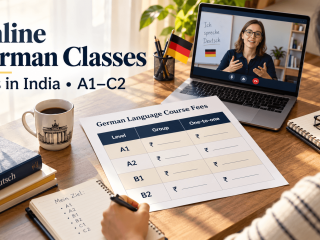
German A1 Online Classes – Your First Step Towards Learning German

German A1 Online Classes – Your First Step Towards Learning German
Learning German opens the door to world-class education, exciting career opportunities, and a rich cultural experience. Whether you plan to study in Germany, work with German companies, or simply learn a new language, German A1 Online Classes are the perfect place to begin.
At the beginner level, you learn the fundamentals of the German language through structured lessons, live interaction, and practical exercises. If you are looking for a comprehensive German Online Language Course, explore the programs offered by IIFLS:
What are German A1 Online Classes?
German A1 Online Classes are designed for complete beginners and follow the Common European Framework of Reference for Languages (CEFR). The A1 level helps learners understand and use simple everyday German expressions and communicate in familiar situations.
To understand what you will achieve after completing this level, read more about the German A1 Level:
You can also review the complete German A1 Syllabus before starting:
Who Should Join German A1 Online Classes?
German A1 Online Classes are suitable for:
- Students planning higher education in Germany
- Professionals looking for international career opportunities
- Nurses preparing to work in Germany
- Engineers and IT professionals
- Doctors planning medical licensing
- Family reunion visa applicants
- School and college students
- Homemakers
- Working professionals
- Anyone who wants to learn German from the beginning
No prior knowledge of German is required.
German Language Certification Programs for Job Seekers
German language certification can be useful for job seekers who want to demonstrate their language proficiency to employers. Students taking German online classes can begin with A1 and gradually work toward higher CEFR levels depending on their career goals. An online German language course with certificate may provide proof of course completion, while recognised external examinations may be required for certain employers, universities or visa-related purposes.
If employment is your primary goal, don't focus only on obtaining a certificate. Use your German A1 online course to build practical speaking, listening and workplace communication skills that can later support progression to A2, B1 and B2.
Industry-Specific German Vocabulary for Tech, Healthcare and Finance
General A1 vocabulary provides the foundation for communication, but professionals can also begin learning terminology connected with their industries.
Technology professionals may start with words related to computers, software, meetings and technical support. Healthcare professionals can gradually learn vocabulary connected with appointments, symptoms, patients and medical environments. Finance professionals may benefit from basic German terminology related to banking, invoices, payments and business communication.
Students who learn German online can create personalised vocabulary lists alongside their regular German lessons online. Learning industry-specific words in complete sentences is usually more useful than memorising isolated terms.
Cultural Integration Tips for German Workplace Success
Language ability is only one part of adapting to a workplace in Germany. Understanding professional culture can also make communication easier.
German workplaces are often associated with punctuality, clear planning, direct communication and respect for responsibilities. However, company cultures vary considerably, so learners should avoid assuming that every German workplace operates identically.
A structured online German language course can introduce cultural situations alongside vocabulary and grammar. Students planning to work in Germany should gradually learn how colleagues greet each other, communicate professionally, participate in meetings and write basic workplace messages.
Remote Jobs in Germany for English Speakers
Some international companies in Germany offer remote or hybrid roles where English is commonly used, particularly in technology, digital services and internationally oriented businesses.
Having A1 German will not automatically qualify someone for a job, but beginning a German A1 online course can demonstrate a willingness to learn the local language. Candidates who continue progressing through German language classes online may later access a wider range of roles requiring stronger German communication.
Job seekers should always check the actual language requirements listed for each position rather than assuming that English or A1 German will be sufficient.
German Company Culture and Communication Styles
Understanding communication style can help international employees adapt more comfortably to German workplaces.
Professional communication may be more direct than some learners are accustomed to, and clarity is often valued. Formal forms such as Sie may initially be used in certain professional contexts, although many modern workplaces use du.
Students taking German online classes can benefit from learning workplace expressions alongside general A1 communication. Over time, German lessons online can introduce increasingly professional vocabulary as learners progress beyond the beginner stage.
Salary Expectations with Different German Language Levels
German language ability can influence access to employment, but there is no fixed salary attached to A1, A2, B1 or B2.
Salary depends primarily on the profession, experience, qualifications, city, employer and industry. However, stronger German may allow candidates to apply for more roles, particularly those involving customers, colleagues or local documentation.
A learner beginning with a German A1 online course should view A1 as the first step rather than a final professional level. Continuing through an online German language course toward B1 or B2 can significantly improve communication ability and potentially expand employment options.Start your language-learning journey with structured German classes from A1 to C2 for beginner through advanced proficiency
Language Exchange Partners for Job-Specific Practice
Language exchanges can complement formal German online classes by providing additional speaking practice.
Instead of discussing only general topics, professionals can practise situations related to their jobs. For example, a software professional might explain a technical problem, while someone working in hospitality could practise speaking with customers.
Students who learn German language online can use language exchanges to convert passive vocabulary into active communication. However, peer practice should supplement rather than completely replace qualified teaching because conversation partners may not always identify grammar mistakes.
Government Support for Language Learners Seeking Employment
Germany offers different integration and language-learning programs, although eligibility varies according to immigration status, employment situation and location.
Job seekers living in Germany may be able to access language or integration support through government agencies or approved programs. Because eligibility and funding rules can change, learners should check current information directly with the relevant German authorities.
For students outside Germany, German online classes and a structured online German language course can provide an accessible way to begin learning before relocation.
German Grammar Basics for Beginners
German grammar can initially look complicated, but A1 focuses only on fundamental structures.
Beginners normally learn personal pronouns, present-tense verbs, basic sentence order, articles, noun gender, common cases, questions, negation and frequently used modal verbs.
A good German A1 online course should teach grammar through real communication rather than presenting long lists of rules. Students taking German language classes online should practise grammar through short sentences, conversations and writing exercises.
Most Important German Phrases for Everyday Life
A1 learners should prioritise expressions they are likely to use regularly.
Useful areas include greetings, introductions, shopping, transportation, ordering food, asking for directions, numbers, time, appointments and basic personal information.
Students taking German lessons online should practise complete phrases rather than memorising individual words. This makes vocabulary easier to retrieve during conversation and helps beginners learn German online more naturally.
How to Practice German Speaking at Home
You don't need to live in Germany to start speaking German.
Practise introducing yourself, describing your room, talking about your daily routine, explaining what you ate or describing your plans for tomorrow. Record yourself and listen for pronunciation and sentence structure.
Students attending German online classes can also practise lesson dialogues aloud between sessions. A German speaking course online or regular conversation practice can provide additional feedback when speaking confidence becomes a priority.
German Learning Myths Debunked
One common myth is that German is impossible to learn because of its grammar. Another is that students must live in Germany to become proficient.
Neither is accurate. German requires consistent practice, but beginners can develop a strong foundation through German online classes, listening resources, speaking practice and regular revision.
Another misconception is that apps alone guarantee fluency. Apps can be useful, but learners generally need broader exposure through a structured German online course, conversation and real communication.
Budget-Friendly Ways to Immerse Yourself in German
Immersion doesn't have to involve expensive travel.
Students can watch German videos, listen to podcasts, change device settings to German, follow German social media, read simple news and practise with language partners.
Learners searching for learn German online free, free German course or a free German language course can find many supplementary resources. Combining free materials with structured German language classes online can provide both affordability and organisation.
Why People Quit German Courses and How to Avoid It
Learners often quit because they expect rapid progress, become overwhelmed by grammar or fail to develop a consistent routine.
Trying to study too much at once can also lead to burnout. Instead, choose a German online course with a realistic schedule and practise in shorter, regular sessions.
A good German A1 online course should provide visible milestones so that students can recognise their progress. Small achievements such as understanding a conversation or speaking for one minute without switching languages can help maintain motivation.
German Pronunciation Tips for English Speakers
German pronunciation is generally systematic once learners become familiar with common sound patterns.
English speakers should pay particular attention to sounds such as ch, German r, ü, ö and vowel length. Listening carefully and repeating native audio can help build accuracy.
Live German lessons online can be especially useful because a teacher can correct pronunciation immediately. Students should focus initially on being understandable rather than trying to develop a perfect native accent.
How to Make German Learning Fun and Engaging
German learning does not have to consist entirely of textbooks and grammar exercises.
Use songs, short videos, games, flashcards, quizzes, conversations and topics you personally enjoy. A student interested in football might follow German teams, while a technology professional could read beginner-level technology content.
Combining enjoyable activities with structured German online classes can improve consistency. The best German language course online should encourage active participation rather than passive listening.
German Learning Resources for Different Learning Styles
Different learners respond to different types of material.
Visual learners may benefit from diagrams, flashcards and videos. Auditory learners may prefer podcasts and listening exercises. Learners who remember through practice may benefit from speaking, writing and role-play.
A well-designed online German language course should combine several formats instead of relying on only one teaching method. Students can supplement their German A1 online course with resources that match their individual learning preferences.
Combining German Classes with Real-World Practice
Classes provide structure, but language develops faster when students use what they learn outside lessons.
After learning shopping vocabulary, practise creating a German shopping list. After learning numbers, practise reading prices. After studying introductions, record yourself introducing yourself naturally.
This combination allows German online classes to connect directly with everyday communication. Students who learn German online should actively search for opportunities to use new grammar and vocabulary between lessons.
Student Success Stories from Online German Courses
Successful online learners usually share one characteristic: consistency.
A student does not need to spend several hours every day learning German. Regular participation in German language classes online, combined with short daily study sessions, can produce steady progress.
Many successful learners also combine their online German language course with listening, speaking and independent vocabulary practice rather than depending exclusively on classroom lessons.
Success should ultimately be measured by what students can communicate, not simply by the number of lessons completed.
Common Mistakes Beginners Make When Learning German Online
One common mistake is trying to translate every sentence directly from English.
Other problems include ignoring noun gender, memorising vocabulary without context, avoiding speaking, inconsistent revision and focusing excessively on grammar.
Students in German online classes should speak from the beginning even if their sentences are simple. A structured German A1 online course should give beginners regular opportunities to make mistakes and receive corrections.
How Online German Learning Compares to Goethe-Institut Standards
Many German courses use the Common European Framework of Reference for Languages, or CEFR, to organise levels from A1 through C2.
When evaluating a German A1 online course, check whether its learning outcomes broadly align with A1 CEFR competencies rather than relying only on the name of the course.
The Goethe-Institut also structures German examinations around CEFR levels. However, attending an independent online German language course and obtaining a Goethe certificate are separate processes. Students intending to take a Goethe examination should use official Goethe examination information and model materials for preparation.
Creating a Home Study Routine for German A1
A simple home routine can make German online classes much more effective.
A learner might spend one day revising vocabulary, another practising grammar, another listening and another speaking. Short daily sessions of 20–30 minutes can be easier to sustain than irregular multi-hour study periods.
Keep one notebook for vocabulary and another section for recurring mistakes. Review both regularly while completing your German A1 online course.
Combining Multiple Platforms for Faster German Learning
Using more than one platform can be helpful when each resource has a clear role.
For example, use an online German language course for structure, a vocabulary app for revision, podcasts for listening and language exchanges for conversation.
However, using too many platforms can create confusion. Students who learn German online should maintain one primary curriculum and use other resources only to supplement it.
Why Many People Fail at Online German Courses
Online learning offers flexibility, but that flexibility can also make procrastination easier.
Students sometimes miss classes, postpone assignments or watch lessons without actively practising. Another common problem is expecting the course itself to create fluency without independent effort.
Successful German online classes require participation. Attend regularly, complete exercises, speak during lessons and revise between sessions.
German A1 vs Other Language Levels: What's the Difference?
A1 is the first CEFR level and focuses on very basic communication.
At A1, learners can introduce themselves, ask simple questions and understand familiar everyday expressions. A2 expands everyday communication, B1 introduces greater independence, B2 supports more complex interaction, and C1 and C2 represent advanced proficiency.
A German A1 online course therefore provides the foundation on which all later German language classes online build.
How Cultural Immersion Helps Online German Learning
Cultural exposure helps language become more meaningful.
Watching German television, following German creators, learning about food, holidays, cities and everyday customs can give vocabulary a real-world context.
Students who learn German language online can create their own form of cultural immersion without living in Germany. The more often learners encounter German outside their formal German lessons online, the easier familiar words and expressions become to recognise.
Technology Tools That Make Online German Easier
Technology can make language practice more accessible and personalised.
Flashcard applications can support vocabulary retention, video platforms provide listening material, speech recording helps pronunciation practice and online dictionaries provide contextual examples.
Students completing a German online course should use technology strategically rather than collecting dozens of applications. Choose a few tools that complement your online German language course and use them consistently.
Measuring Real Fluency in Your German A1 Course
Completing lessons does not automatically mean you have mastered A1.
Instead, measure what you can actually do. Can you introduce yourself without reading a script? Can you understand a simple question? Can you order food, tell the time, read a short message or write a basic email?
These practical abilities are better indicators of progress than simply completing modules in a German A1 online course.
At A1, the goal is not full fluency. It is to establish a reliable beginner foundation that allows you to continue learning through A2, B1, B2 and higher levels.
Building a Complete German Learning Journey Online
Students today can learn German online from beginner to advanced levels through a combination of live teaching, self-study and digital resources. A structured online German language course gives learners a clear syllabus, while German lessons online provide teacher interaction and feedback.
Beginners can start with a German A1 online course, use free resources for additional practice and gradually progress toward more advanced communication. The most effective approach combines structured German online classes, speaking practice, cultural exposure and consistent independent learning.
Whether your goal is employment, higher education, relocation or personal development, A1 is the starting point. Building a strong foundation now makes every subsequent German level easier to manage.
If you prefer classroom learning, you may also explore:
German Language Course:
German Classes in Bangalore:
German Language Course in Chennai:
FAQs for German A1 Online Classes
1. Can I Learn German A1 Online From Home?
Yes. You can complete the A1 level through German online classes from home. A structured German A1 online course should cover pronunciation, basic grammar, vocabulary, listening, speaking, reading and writing. Students who learn German online should choose a course that includes interaction and regular practice rather than relying entirely on recorded videos.
2. How Long Does It Take to Learn German A1?
The time required depends on lesson frequency, previous language-learning experience and how much you practise independently. A structured online German language course combined with regular revision can help you progress systematically. Rather than focusing only on weeks or months, measure whether you can actually perform basic A1 communication.
3. Best Online German A1 Course for Complete Beginners
The best German language course online for a beginner should start from zero and include pronunciation, vocabulary, grammar, speaking, listening, reading and writing. When comparing German online classes, look at teacher experience, live teaching hours, class size, course materials and opportunities to practise speaking.
4. How to Learn German with a Full-Time Job
Working professionals can learn German online by choosing flexible classes and maintaining short, consistent study sessions. Live German lessons online eliminate commuting and can make it easier to fit language learning around work. Even 30 minutes of regular revision can reinforce what you learn during class.
5. Is Online German Tutoring Better Than Self-Study?
Neither approach is automatically better. Self-study provides flexibility, while private German lessons online can provide individual corrections and speaking practice. Beginners can also combine a structured German A1 online course with occasional tutoring when they need extra help.
6. How Much Does an Online German A1 Course Cost?
The price of a German A1 online course varies according to teaching hours, group size, teacher experience and whether lessons are private or group-based. When comparing a German online course, calculate the cost per live teaching hour instead of looking only at the total fee.
7. Can I Reach B2 Level with Online German Classes?
Yes, students can progress beyond A1 through structured German online classes if subsequent courses cover the appropriate CEFR levels. An online German language course can take learners from beginner German toward A2, B1 and B2 when supported by consistent speaking, listening and independent practice.
8. What's the Fastest Way to Learn German A1?
The fastest sustainable approach is usually consistent study rather than trying to memorise large amounts of German quickly. An intensive German online course can accelerate progress, but you still need vocabulary revision, listening and speaking outside lessons.
9. Free Online German A1 Courses: Are They Worth It?
Students searching for learn German online free, German online course free or a German A1 course online free can find useful materials for vocabulary, grammar and listening. Free resources can work well as supplementary practice, although beginners may still benefit from structured teaching and feedback.
10. How to Find a Good German Online Tutor
Look for a tutor with experience teaching beginners, clear explanations and plenty of speaking practice. If you are taking German private lessons online, ask whether the teacher follows a structured A1 syllabus and provides corrections, homework and progress feedback.
11. German A1 to C1: Can You Do It Online?
Yes. It is possible to learn German language online from A1 through higher proficiency levels. However, as you progress, your German online classes should include increasingly complex conversation, listening, writing and authentic German materials rather than simply continuing beginner-style exercises.
12. Best German Learning Apps for A1 Level
Apps can supplement a German A1 online course by helping with vocabulary, pronunciation and daily repetition. However, an app should not necessarily replace structured German lessons online, especially when you need speaking practice and individual correction.
13. How Many Hours Per Week Do I Need to Learn German A1?
There is no single number suitable for every learner. Your weekly routine should combine your German online classes with independent vocabulary, listening, grammar and speaking practice. Consistency matters more than completing occasional very long study sessions.
14. Does Online German Learning Actually Work?
Yes, provided the course is well structured and the learner participates actively. A good online German language course can include live teaching, digital materials, speaking activities, assignments and feedback. The effectiveness of German online classes depends more on course quality and student participation than physical location.
15. Self-Paced vs Live German A1 Classes: Which Is Better?
Self-paced German online courses provide flexibility, while live German online classes offer immediate teacher interaction and speaking practice. Complete beginners who need accountability and pronunciation correction may find live instruction particularly useful.
16. How to Stay Motivated Learning German Online
Set small weekly goals instead of focusing only on completing A1. When you learn German online, track improvements such as understanding a short conversation, remembering vocabulary or introducing yourself more confidently. Regular German lessons online can also create accountability.
17. German A1 Online Course Reviews: What Do Students Say?
Reviews can help you understand teacher quality, course organisation and student experience, but don't choose a German online course based on ratings alone. Check whether reviews discuss actual teaching hours, speaking practice, class size, learning materials and support.
18. Can I Learn Conversational German A1 Online?
Yes. A good German A1 online course should introduce conversation from the beginning. Interactive German lessons online can help students practise introductions, ordering food, asking questions, discussing routines and handling other basic everyday situations.
19. What Language Platform Is Best for German Beginners?
There is no single platform that is best for everyone. When comparing German online classes, consider whether you prefer live group lessons, private tutoring or self-paced learning. The best German language course online should match your budget, schedule and learning style.
20. How to Choose Between German Online Courses and In-Person Classes
Both can be effective. German online classes offer convenience and eliminate travel, while classroom courses provide physical interaction. A well-designed online German language course with live speaking practice can provide many of the benefits of classroom learning.
21. German A1 Practice: Best Exercises and Resources Online
Combine vocabulary exercises, beginner listening, pronunciation practice, simple reading and basic writing. Students taking German online classes can use these resources between lessons to reinforce what they learn during their German A1 online course.
22. How to Get Certified in German A1 Online
First distinguish between completing an online German language course with certificate and passing an externally recognised German proficiency examination. A German language course with certificate online may provide a completion certificate, but students needing an official qualification should verify which examination their university, employer or authority accepts.
23. Learning German A1 Without Living in Germany: Is It Possible?
Yes. You don't need to live in Germany to learn German online successfully. Through German lessons online, German audio, videos, reading materials and conversation practice, learners can create substantial exposure to the language from another country.
24. What to Expect in Your First German A1 Online Lesson
Your first German A1 online course lesson may introduce greetings, pronunciation, the alphabet, numbers and simple personal information. Good German online classes generally start gradually because complete beginners need time to become familiar with German sounds and sentence structures.
25. German A1 Pronunciation: Can You Learn It Online?
Yes. Live German lessons online can include pronunciation demonstrations, repetition and teacher correction. Students can also record themselves and compare their pronunciation with native audio while completing an online German language course.
26. Best Time of Day to Learn German Online
There is no universal best time. Choose a time when you can concentrate and attend German online classes consistently. Someone who is mentally fresh in the morning may prefer early lessons, while a working professional may find evening German lessons online more practical.
27. How Much German Can You Learn in 30 Days?
Thirty days can provide a useful introduction to German, particularly with consistent German online classes and daily practice. However, don't assume that completing 30 days of a German online course automatically means you have mastered the complete A1 level.
28. Can You Learn German A1 With Zero Prior Language Experience?
Yes. A German A1 online course is designed for beginners and should not require previous German knowledge. Students can learn German online starting with basic pronunciation, greetings, numbers and vocabulary before progressing to grammar and conversation.
29. Interactive vs Pre-Recorded German A1 Courses: Which Works Better?
Interactive German online classes provide immediate feedback, questions and speaking opportunities. Pre-recorded German online courses offer greater flexibility. Beginners may benefit from combining live teaching with recordings for revision.
30. How to Practice German A1 Speaking with Limited Time
Use five- or ten-minute speaking sessions throughout your week. Introduce yourself, describe your day or answer simple questions aloud. Combine this with interactive German lessons online so that a teacher can correct mistakes and pronunciation.
31. German A1 Vocabulary: How Many Words Do You Need to Learn?
Instead of focusing entirely on a specific word count, learn vocabulary required for A1 situations such as family, food, travel, numbers, shopping, time and daily routines. A structured German A1 online course should introduce vocabulary progressively and teach students how to use words in sentences.
32. Best Online German Courses for English Speakers
English-speaking beginners should look for German online classes that explain unfamiliar grammar clearly without depending excessively on translation. The best German language course online should gradually encourage learners to understand and use German directly.
33. Can I Learn German A1 on My Smartphone?
You can complete many exercises and even attend some German lessons online using a smartphone. However, longer writing assignments and live German online classes may be easier on a laptop or desktop. Smartphones are particularly useful for vocabulary and short daily practice.
34. How to Track Progress in Your Online German A1 Course
Track what you can actually do in German. After several weeks of an online German language course, check whether you can introduce yourself, understand simple questions, read short messages and participate in basic conversations.
35. German A1 Grammar: What's the 80/20 Rule?
For beginners, the idea is to prioritise grammar and vocabulary that appear frequently in everyday communication. Your German A1 online course should focus first on essential sentence structures, common verbs, articles, questions, pronouns and basic word order before introducing unnecessary complexity.
36. What Do You Actually Learn in German A1 Level?
German A1 introduces basic vocabulary, pronunciation, grammar and everyday communication. A structured online German language course should help learners introduce themselves, ask and answer simple questions, understand familiar expressions and communicate in predictable situations.
37. Online German Tutoring: Hourly Rate vs Package Deals
Hourly German private lessons online provide flexibility, while packages may reduce the effective lesson price. Before buying a package, calculate the cost per hour and confirm the tutor's experience, cancellation policy and whether materials are included.
38. How to Avoid Wasting Money on German Online Courses
Don't select German online classes based only on advertising or the cheapest price. Compare live teaching hours, class size, teacher qualifications, syllabus, speaking opportunities and feedback. A cheaper German online course can become expensive if you later need additional tutoring.
39. Getting a Job Faster with German A1 Certification Online
A1 demonstrates basic German ability, but it does not guarantee employment. Completing a German language course with certificate online can show that you have started learning German, while many jobs requiring regular German communication may expect considerably higher proficiency.
40. Can I Get a Job in Germany with Only A1 German?
Some English-speaking positions may not require advanced German, but A1 alone will not meet the language requirements of many jobs. German online classes can help you continue beyond A1 toward the level required for your occupation. This question appears prominently in your German A1 student-topic report.
41. Is the German A1 Exam Hard?
The German A1 exam is designed for beginners, but students still need preparation across listening, reading, writing and speaking. A structured German A1 online course can build the required language foundation, while model tests help students become familiar with the examination format.
42. What Is the Cheapest Way to Learn German A1?
Students can learn German free through videos, websites, apps and public learning resources. Searches such as learn German online free, free German course and free German language course reflect the availability of many options. Combining free resources with occasional teacher feedback can provide an economical learning strategy.
43. Can Apps Alone Teach Me German A1?
Apps can support vocabulary, grammar and repetition, but may provide limited spontaneous speaking and individual feedback. Students who learn German language online can combine apps with live German online classes to develop a more balanced set of language skills.
44. Are German Online Certificates Worth It?
Their value depends on why you need the certificate. An online German language course with certificate can document course completion, but it should not automatically be treated as equivalent to an externally recognised proficiency examination. Always check the requirements of the organisation requesting proof of German.
45. How Do I Find Affordable German Classes Online?
Compare the total price, live teaching hours and group size across German online classes. A lower course fee doesn't necessarily provide better value. Students should also compare a German online course with private tutoring and free supplementary resources before deciding.
46. How Can I Learn German Online for Free?
Students searching for learn German online free can use free videos, vocabulary tools, podcasts, beginner exercises and German-learning websites. A free German language course can provide useful practice, although learners should make sure their resources collectively cover speaking, listening, reading, writing and grammar.
47. Are Online German Classes with Live Teachers Better Than Recorded Lessons?
Live German online classes allow students to ask questions and receive corrections immediately. Recorded German lessons online provide flexibility and allow repeated viewing. A combination of live instruction and recorded revision can work particularly well for A1 beginners.
48. How Do I Choose the Right Online German Course for Me?
Start with your goal, schedule and budget. Compare the curriculum, live teaching hours, batch size, teacher experience and speaking opportunities. The best German language course online for you should provide the structure and interaction you need rather than simply having the lowest price.
49. Is It Too Late to Learn German as an Adult?
No. Adults can learn German online at different ages. Working professionals may actually benefit from structured routines and clear goals. Flexible German online classes make it possible to study around professional and family commitments.
50. What's Included in an Online German Beginner Course?
A quality online German language course for A1 should normally include beginner vocabulary, pronunciation, grammar, listening, speaking, reading and writing. German online classes should also provide structured lessons, practice activities and opportunities for feedback so that students build a solid foundation before progressing to A2.
Conclusion
German A1 Online Classes provide the perfect foundation for anyone beginning their German language journey. Whether your goal is higher education, career advancement, migration, or personal development, mastering the A1 level equips you with essential communication skills and prepares you for higher proficiency levels.
By choosing structured training, practicing consistently, and progressing step by step through the CEFR levels, you can confidently achieve your language goals.
Explore more German language resources and courses at:
Useful External Resources
Goethe-Institute – German Language Courses
DAAD – German Academic Exchange Service
Make it in Germany – Official German Government Portal
Related Posts